














Quick answer: A milk leave-in conditioner is a no-rinse conditioner made with milk-derived protein, usually hydrolyzed milk protein, that helps dry hair hold moisture and comb out without snapping. Spray versions are light and best for fine to medium hair and daily detangling; creamy "hair milk" lotions are heavier and suit thick, coily or very dry hair. Apply it to damp, towel-dried hair from mid-lengths to ends, comb through, and do not rinse.
| Format | Best for | Weight | When to use |
|---|---|---|---|
| Two-phase milk spray | Fine, medium, color-treated, tangle-prone hair | Light | Every wash day, before blow-drying, mid-day refresh |
| Creamy hair milk lotion | Thick, curly, coily or very dry hair | Medium to rich | Wash days, air-drying, curl definition |
| Rinse-out milk mask | Dry, brittle, heat-styled hair | Rich | Once or twice a week, before the leave-in |
"Milk leave in conditioner" comes up again and again in the searches that bring people to our site, along with "milk leave in conditioner spray" and "hair milk leave in conditioner." The confusion is understandable. Some products are called hair milk, some are milk sprays, some are creamy conditioners that happen to contain milk protein, and the labels rarely explain the difference. This guide sorts it out the way we would in a salon education class: what the ingredient does, which format fits which hair, and how to use it so you actually see a difference.
What is a milk leave-in conditioner?
A milk leave-in conditioner is a conditioner you apply after washing and do not rinse out, built around a milk-derived ingredient. In professional formulas that ingredient is almost always hydrolyzed milk protein. "Hydrolyzed" means the protein has been broken into smaller pieces so it can sit on and around the hair cuticle instead of just sliding off. It is not the same as pouring milk on your hair. Fresh milk spoils, smells, and leaves fat on the scalp. A cosmetic milk protein gives you the useful part without the downsides.
What it does in practice:
- Helps hair hold moisture. Protein fragments bind water, so dry lengths feel softer and less straw-like for longer after styling.
- Improves slip and combability. Paired with conditioning agents, it lets a wide-tooth comb glide through wet hair, which means less breakage at the ends.
- Adds a smoother feel and more shine. A smoother cuticle reflects more light and frizzes less.
It is not a bond builder and it does not rebuild hair from the inside. Think of it as daily conditioning that makes dry, porous hair behave better.
Milk leave in conditioner spray vs. creamy hair milk
This is where most people pick the wrong product for their hair type.
Milk leave-in conditioner spray
Sprays are light. The best ones are two-phase: you will see two layers in the bottle, a watery conditioning layer and a lighter protective layer. Shaking mixes them so every spray delivers both. Sprays are ideal if your hair is fine to medium, gets weighed down easily, tangles after washing, or is color-treated and needs protection before a blow-dryer or flat iron.
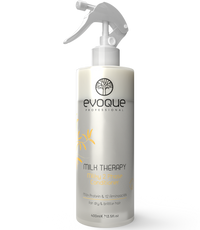
Our Milk Therapy Two-Phase Leave-In Conditioner spray is built this way. It contains hydrolyzed milk protein and is formulated with 12 essential amino acids, it helps protect against heat up to 450°F / 230°C, and it sits at a pH of 3.5 to 4.5, which helps keep the cuticle closed and smooth. It is sulfate-free and paraben-free and comes in 100ml, 200ml and 400ml sizes.
Hair milk leave-in conditioner (creamy lotion)
Creamy hair milks are thicker, closer to a light lotion. They suit thick, curly and coily textures that drink product and need more weight to stay defined and soft through the day. On fine hair they usually leave the roots flat and the ends greasy by day two.
Simple rule: if you can see your scalp easily through your hair, or your hair goes limp with most products, choose a spray. If your hair is dense, curly or coily and still feels dry an hour after conditioner, a creamy hair milk or layering a spray under a cream works better.
Who should use a milk leave-in conditioner?
Milk protein leave-ins earn their place in these situations:
- Color-treated or lightened hair that feels rough and tangles when wet.
- Hair you heat style two or more times a week.
- Dry climates, including Southern California summers, where hair loses moisture fast.
- Long hair with dry ends but a normal scalp.
Who should go easy: if your hair already feels stiff, crunchy or snaps when you stretch a wet strand, you may be using too much protein across your routine. Alternate your milk leave-in with a protein-free conditioner for a couple of weeks and see how your hair responds. Healthy hair should stretch slightly and return; hair that does not stretch at all usually needs more moisture, not more protein.
How to use a milk leave-in conditioner (step by step)
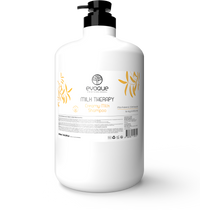
- Wash and condition. Use a gentle cleanser such as Milk Therapy Hydrating Shampoo, which is sulfate-free and made for dry and color-treated hair, then your regular conditioner or mask.
- Towel-dry gently. Squeeze water out; do not rub. Hair should be damp, not dripping, or the leave-in just runs off.
- Shake the bottle well if it is a two-phase spray, until the layers fully mix.
- Spray mid-lengths to ends first. Hold the bottle about 6 to 8 inches away. For shoulder-length hair start with 4 to 6 sprays; for long or thick hair, 8 to 12. Keep it off the roots unless your scalp is very dry.
- Comb through with a wide-tooth comb, starting at the ends and working up.
- Style as usual. Blow-dry, flat iron, or air-dry. Do not rinse.
- Refresh on day two or three with one or two sprays on dry ends to cut frizz and bring back shine.
Using too much is the most common mistake. If hair feels coated or looks flat, cut the number of sprays in half before deciding the product is wrong for you.
Milk shampoo and conditioner: building a full milk routine
A leave-in works best when the steps before it are not stripping the hair. A full milk protein routine for dry hair looks like this:
- Cleanse: a gentle milk protein shampoo, 2 to 3 times a week for dry hair. We explain how milk protein works in a cleanser, and how to avoid protein overload, in our guide to milk protein shampoo for dry hair.
- Condition: a matching hydrating conditioner on mid-lengths and ends, 2 to 3 minutes.
- Treat: a rinse-out mask once or twice a week in place of conditioner.
- Protect: the leave-in spray every wash day.
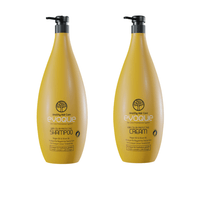
If you want the three daily steps together, the Milk Therapy Power Trio (shampoo, conditioner and two-phase leave-in) bundles the 1L shampoo, 1L conditioner and 400ml leave-in for $89. You can see every size and format in the Evoque Milk Therapy collection.
Milk hair mask or milk leave-in: do you need both?
They do different jobs. A mask is a rinse-out treatment with a higher concentration of conditioning ingredients; you leave it on for several minutes and wash it off. A leave-in stays on the hair all day to manage tangles, frizz and heat.
If your hair is mildly dry, the leave-in alone is usually enough. If it is brittle, heavily lightened or heat styled often, add a mask once or twice a week. The Milk Therapy Deep Treatment Masque is applied after shampooing, left on for 5 to 10 minutes and rinsed. It is not a leave-in, so follow it with the spray.
Common mistakes with leave-in milk conditioner
- Applying to soaking wet hair. Water dilutes it and it drips away. Towel-dry first.
- Starting at the roots. Roots rarely need it and will look flat. Start at the ends.
- Skipping the shake on a two-phase formula. You only get half the product.
- Stacking several protein products every day. If hair turns stiff, rotate in protein-free moisture.
- Treating it as your only heat protection on very high heat. Check the temperature rating and keep tools at or below it.
FAQ
What does a milk leave-in conditioner do for hair?
It helps dry hair hold moisture, makes wet hair easier to comb, reduces frizz and adds shine. Formulas with heat protection also help shield hair during blow-drying and flat ironing.
Is a milk leave-in conditioner spray good for fine hair?
Yes, a spray is usually the best choice for fine hair because it is light. Use fewer sprays, focus on the ends, and avoid creamy hair milks, which tend to weigh fine hair down.
What is the difference between hair milk and a leave-in conditioner?
"Hair milk" usually refers to a creamy, lotion-like leave-in, often for curly or coily hair. A milk leave-in conditioner can be a cream or a light spray. Both stay in the hair; the difference is texture and weight.
Can I use a milk leave-in conditioner every day?
Yes. A light spray can be used every wash day and as a refresher on dry ends between washes. If hair starts to feel stiff, use it less often or alternate with a protein-free product.
Should I use milk shampoo and conditioner with a milk leave-in?
It is not required, but it helps. A sulfate-free milk shampoo and a hydrating conditioner prepare the hair so the leave-in has less work to do and results last longer between washes.
Is a milk leave-in conditioner safe for color-treated hair?
Most professional milk leave-ins are made for color-treated hair. Our two-phase spray is sulfate-free, paraben-free and made for dry, brittle and color-treated hair.
By the Evoque Professional education team.