














The short answer
Yes, you can use leave-in conditioner and heat protectant spray together. Apply the leave-in first on towel-dried hair, comb it through, then mist the heat protectant last, right before the blow-dryer or flat iron. If your leave-in is labeled as heat protective, it can do both jobs in one step, so you do not need a second spray.
| Your routine | What to use |
|---|---|
| Air-dry, no hot tools | Leave-in conditioner only |
| Blow-dry most days | A heat-protective leave-in, one step |
| Flat iron or curling iron | Leave-in first, then a heat protectant rated for your iron temperature |
| Keratin-treated or color-treated hair | A lightweight, heat-protective leave-in made for treated hair |
In the salon, the question we hear most at the styling chair is not "which product is best" but "what goes on first." Clients buy a leave-in and a heat protectant, then stand at the mirror with both bottles and no idea how to layer them. This guide answers that, plus the related questions people actually search for: whether a leave-in can replace heat protectant, whether you need both, and what is safe for keratin-treated hair.
Heat protectant spray and leave-in conditioner: what each one does
A leave-in conditioner is a conditioner you do not rinse out. Its job is to detangle, soften, smooth the cuticle and keep moisture in the hair between washes. Most leave-ins are light sprays or creams that you work through the mid-lengths and ends.
A heat protectant is a styling product designed to sit on the surface of the hair and reduce the damage caused by blow-dryers, flat irons and curling irons. Heat protectants usually rely on film-forming ingredients, often silicones such as cyclopentasiloxane or amodimethicone, that coat the strand and help slow down moisture loss when heat hits the hair.
The overlap is bigger than most people think. Many modern leave-in sprays contain the same film-forming ingredients as heat protectants, which is why some of them are formulated and labeled to do both jobs. The label is what matters: if the product does not say it protects against heat, treat it as a conditioner only.
Leave-in conditioner and heat protectant spray: which goes first?
Leave-in conditioner goes first. Heat protectant goes last, right before heat. Here is why that order works:
- The leave-in needs contact with the hair. It is there to condition the strand, so it should go on clean, towel-dried hair where it can spread evenly.
- The heat protectant needs to be the outer layer. Its film is what meets the hot air or the iron plates, so it should be the last thing you apply before styling.
- Comb between the two. Combing the leave-in through first means the heat protectant lands on detangled hair and coats it evenly instead of sitting on knots.
If you use a hair oil or serum, it usually goes after heat styling as a finisher, unless the serum itself is labeled as heat protective. In that case a few drops on damp ends before blow-drying is fine.
Can a leave-in conditioner be used as a heat protectant?
Only if it says so on the label. Some leave-ins are formulated with heat protection, and some are not. A plain leave-in conditioner will still make hair softer and easier to brush, which reduces breakage from pulling, but it is not designed to stand up to direct heat from an iron.
Several leave-ins in the Evoque Professional line are made to do both jobs:
- The Smart Keratin Leave-In Conditioner Spray is a lightweight mist with keratin-based amino acids, argan oil and macadamia oil. It provides UV and thermal heat protection up to 450°F / 230°C, detangles, and controls frizz and flyaways. It comes in a 400ml size and a 100ml travel size.
- The Miracle Touch Leave-In Conditioner is an ultra-lightweight prep spray for all hair types. It forms a protective water shield that blocks humidity, guards against heat damage from styling tools, works as a bond-builder and reduces blow-dry time. It comes in 150ml.
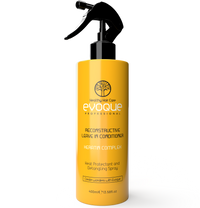
- The Healthy Care Reconstructive Two-Phase Leave-In Conditioner is a two-phase spray with hydrolyzed keratin and argan extract, made for color-treated, normal or dry hair. It helps protect color from fading and helps shield hair from UV and heat. It comes in 400ml.
With any of these, you can skip a separate heat protectant for everyday blow-drying. If you flat iron at high settings, check that the temperature on your iron stays within what your product is rated for. The Smart Keratin Leave-In is the one in this group with a stated temperature rating, which is why it is our pick for flat-iron days.
Do you need both a leave-in and a heat protectant?
It depends on how you style.
You probably need only one product if you blow-dry a few times a week and your leave-in is labeled heat protective. Layering two film-forming sprays on top of each other can make fine hair feel coated and limp, so one good product is often better than two.
You may want both if you have thick, coarse or very dry hair that needs more conditioning than a light spray gives, and you use a flat iron or curling iron regularly. In that case use a richer leave-in first for moisture, then a heat protectant as the top layer.
You need neither for heat if you air-dry. A leave-in alone is enough for softness, detangling and frizz control.
Leave-in conditioner safe for keratin treated hair
After a keratin or smoothing treatment, the goal is to keep the hair smooth for as long as possible. That means a gentle shampoo, no harsh clarifying products, and a leave-in that adds slip without stripping or weighing the hair down.
The Smart Keratin Leave-In Conditioner is made specifically for this. It is designed to help extend and protect keratin and smoothing treatments, it is sulfate-free and paraben-free, and because it also protects against heat, it fits the blow-dry routine most people use to keep a keratin finish sleek. Spray it on damp or dry hair, focus on mid-lengths and ends, comb through and style.
For a full aftercare plan, including how long to wait before washing and which shampoo to use, read our guide on how to make a keratin treatment last longer.
Heat protectant leave-in conditioner vs serum
Sprays and serums can both protect against heat, but they feel different on the hair:
- Sprays are lighter and spread evenly over the whole head. They suit fine and normal hair and anyone who does not want residue.
- Serums and oils are more concentrated. They suit thick, dry, frizz-prone ends and give more shine. The Smart Keratin Oil Serum contains keratin-based amino acids, argan oil and macadamia oil, provides heat and UV protection, and can be used before heat styling to protect and after styling for extra shine and frizz control.
A combination many of our stylists use on thick hair: leave-in spray all over, a few drops of serum on the ends only, then blow-dry.
How to use leave-in conditioner and heat protectant: a simple routine
- Wash and condition. Rinse well, then gently squeeze water out with a towel. Do not rub.
- Apply the leave-in. Shake the bottle, then spray evenly from mid-lengths to ends. Use less near the roots if your hair is fine.
- Comb through. Use a wide-tooth comb, working up from the ends.
- Wait a few minutes. The Miracle Touch Leave-In directions call for 5 minutes before blow-drying so the formula can absorb. This is a good habit with any leave-in.
- Add heat protection if needed. If your leave-in is not heat protective, or you are about to use a flat iron, mist a heat protectant now as the final layer.
- Style. Blow-dry with the nozzle pointed down the hair shaft, then use hot tools on fully dry hair only.
- Finish. Smooth a drop of serum over the ends if you want extra shine.
Want more detail on amounts and hair-type tips? See our guide on how to use leave-in conditioner the right way, or browse the full leave-in conditioner collection.
Common mistakes to avoid
- Using a flat iron on damp hair. Hot tools should only touch fully dry hair, whatever products you use.
- Spraying the roots heavily. This is the fastest way to make hair look flat and oily by the afternoon.
- Assuming every leave-in protects from heat. Read the label. If heat protection is not listed, add a heat protectant.
- Stacking too many products. If your hair feels coated, drop one product. A single heat-protective leave-in is often enough.
Frequently asked questions
Can I use leave-in conditioner and heat protectant together?
Yes. Apply the leave-in first on towel-dried hair, comb it through, then apply the heat protectant as the last step before heat styling.
Does heat protectant go before or after leave-in conditioner?
After. The heat protectant should be the outer layer, so it goes on last, right before the blow-dryer or iron.
Can keratin be a leave-in conditioner?
Keratin itself is a protein, not a product, but many leave-in conditioners contain hydrolyzed keratin or keratin-based amino acids. The Smart Keratin Leave-In Conditioner and the Healthy Care Reconstructive Two-Phase Leave-In both contain hydrolyzed keratin and are used without rinsing.
Is leave-in conditioner safe for keratin treated hair?
Yes, as long as it is gentle and lightweight. The Smart Keratin Leave-In Conditioner is made to help extend and protect keratin and smoothing treatments, and it is sulfate-free and paraben-free.
Do I still need heat protectant if my leave-in says it protects from heat?
For everyday blow-drying, usually not. If you use a flat iron at a high setting, make sure your product is rated for that temperature, or add a dedicated heat protectant as the last layer.
How do I apply leave-in conditioner before blow-drying?
Spray it evenly on towel-dried hair from mid-lengths to ends, comb it through, wait a few minutes so it can absorb, then blow-dry.
By the Evoque Professional education team.