














Most guides to buying hair products wholesale are written by people who have never had to sit on dead stock. This one is written from the manufacturing side, which means it includes the parts suppliers usually leave out.
If you run a beauty supply store, a salon chain, or a small distribution operation, the decision you are making is not really "which brand do I like." It is "which brand will still be paying my rent in eighteen months." Those are different questions.
1. Know which kind of supplier you are talking to
Three very different businesses will all answer your email, and their pricing will differ by 30 to 50 percent for the same bottle.
- The manufacturer. They make the product. There is no layer between you and the source, so the margin that would have gone to an importer and a national distributor is available to be split between you and them.
- The national or regional distributor. They buy from manufacturers and resell to you. Convenient if you want many brands on one invoice, but you are paying for that convenience and they set your floor price.
- The liquidator or diverter. They sell brand-name product sourced through grey channels. Prices look incredible. Stock is inconsistent, batch codes may be removed, and you have no recourse if a customer complains.
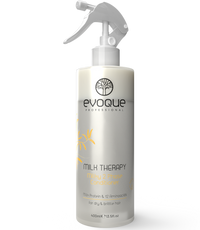
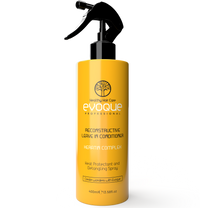
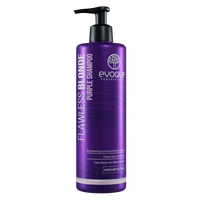
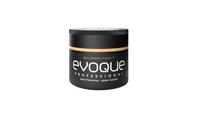
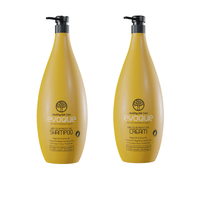
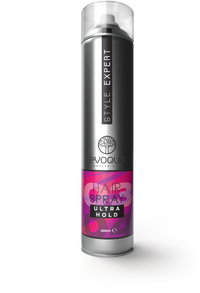
The first question to ask any supplier is simply: do you manufacture this yourself? The answer reshapes everything else in the negotiation. Evoque is in the first category, with wholesale sold factory direct from our own California production.
2. Understand what the minimum order actually means
Opening order minimums in professional hair care typically run from $500 to $5,000. A low minimum is not automatically good news and a high one is not automatically bad.
A very low minimum often signals a supplier who will sell to anyone, which means the shop two miles away can stock the same line. A minimum in the $2,000 to $3,000 range usually indicates a supplier who is selecting partners rather than collecting orders.
What matters more than the number is the reorder minimum. An opening order of $2,500 with no reorder minimum is far better for cash flow than an opening order of $1,000 that forces you to buy $1,000 every time you run out of one shampoo. Ask about both.
For reference, the Evoque opening order is $2,500 with no minimum on reorders. Single salons that need less start on the Salon Program instead.
3. Do the margin math properly
Retailers routinely quote each other keystone pricing, meaning a 50 percent margin, as the professional standard. In practice the number that matters is not the headline discount, it is the margin after everything.
Work it out like this:
- Start with the wholesale unit cost.
- Add inbound freight per unit. On liquids this is not trivial.
- Add the cost of any minimum you were forced to buy and will not sell within six months.
- Compare against the lowest price that product is publicly available anywhere, not the MSRP on the price sheet.
That last step is the one that catches people. A 55 percent margin against MSRP is worth nothing if the same bottle is on Amazon at 40 percent off. You are not competing with MSRP, you are competing with the cheapest listing your customer can find on their phone while standing in your store.
4. Ask the channel protection question directly
This is the single most important question in the conversation, and most buyers never ask it.
Ask, word for word: Is this brand sold on Amazon? Is it in mass retail? What is your policy on diverters, and what have you actually done about it?
A serious professional brand will have a clear answer and will have enforced it. A brand that hedges is telling you that your shelf price will be undercut within a year.
Evoque is not on Amazon and not in mass retail, and we hold full MSRP on our own site rather than undercutting the stores that carry us. This is not generosity, it is the only way a professional catalog holds its margin.
5. Check that they can actually keep you in stock
Nothing kills a new line faster than a customer who tried it, liked it, came back, and found an empty shelf. They will not come back a third time.
Questions worth asking:
- Where is the product manufactured, and where does it ship from?
- What is your typical lead time on a reorder?
- How often have you been out of stock on a top seller in the last year?
- Do you manufacture in-house or contract it out?
A supplier shipping from a domestic facility they own can answer these confidently. One relying on overseas contract production and container shipping usually cannot, which is why a brand can be unavailable for six weeks with no warning.
6. Build the first order to sell through, not to fill the shelf
The instinct with a new line is to take a little of everything. This is the wrong move. A thin spread across ten products looks disorganized on shelf and guarantees you will be out of the two things that sell while sitting on the eight that do not.
A better opening assortment:
- Two or three complete lines, in depth. A customer who buys the shampoo should be able to buy the matching conditioner and mask on the same visit. Cross-sell within a line is where the basket size comes from.
- Pick lines by the problems your customers actually walk in with. If your neighborhood is heavily color-treated, lead with color protection and bond repair. If it is textured hair, lead with deep moisture and masks.
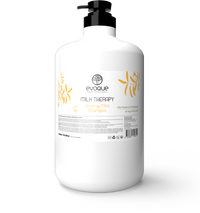
- Add liter and backbar sizes if you sell to salons. Professional accounts buy litres, and the per-order value is several times a retail bottle.
- Take the travel sizes. They are the cheapest way to get a first-time customer to try a line, and they move at the register.
Any supplier worth working with will help you build this rather than emailing you a generic order form. If they will not, that tells you how much support you will get after the invoice clears.
7. Settle terms before you commit
Things to have in writing before the first order:
- Payment terms, and whether net terms open up after a set number of orders
- Freight: who pays, and at what order value does it become free
- Return or exchange policy on slow movers and damaged goods
- Whether any territory protection exists, even informally
- Marketing support: images, sampling, education, display material
The last one is undervalued. A brand that gives you product photography, training on what each line actually does, and samples to hand out is a brand that wants you to sell through rather than just buy in.
8. Red flags
- They will not say where the product is manufactured.
- Pricing is dramatically below every other quote you have.
- Batch codes or lot numbers are missing from the bottles.
- They cannot produce GMP certification or confirm FDA compliance.
- There is no written MAP or MSRP policy.
- They take three days to answer a pre-sale email. That is how fast they will answer when you have a problem.
A reasonable process
Request price lists from three suppliers. Ask all three the channel protection question and the manufacturing question. Compare margin after freight against the real street price, not MSRP. Order a small assortment or samples before committing to the full minimum where possible. Then go deep on the one that performs, rather than shallow on all three.
Evoque Professional manufactures its own catalog in California: 150+ SKUs across 10 lines, GMP certified and FDA compliant, stocked in more than 10,000 U.S. salons. Opening order $2,500, no reorder minimum, not sold on Amazon or in mass retail.
Request the wholesale price list and it comes back the same business day, or call (714) 213-4608 and get pricing on the phone.