














Quick answer: most blondes should use purple shampoo once a week. Platinum, silver and heavily bleached hair can go to 1 to 2 times a week. Golden and honey blonde: every 1 to 2 weeks. Leave it on for 1 to 3 minutes, never more than 5, and always follow with conditioner or a mask.
| Your hair | How often | Leave on |
|---|---|---|
| Platinum, silver, white | 1 to 2 times a week | 1 to 3 min |
| Bleached, high porosity | 1 to 2 times a week, short contact | 30 to 60 sec |
| Cool or ash blonde | Once a week | 1 to 2 min |
| Golden or honey blonde | Every 1 to 2 weeks | 1 min |
| Balayage, highlights | Every 1 to 2 weeks, lightened sections only | 1 to 2 min |
Updated October 2026 by the Evoque Professional education team.
Purple shampoo is the most misused product in blonde hair care. Half of people don't use it often enough and complain their blonde looks orange within three weeks. The other half use it every wash and end up with a grey-lilac cast they then have to strip out.
The right answer depends on your shade, your porosity and what you are actually trying to fix.
Why purple works at all
It comes down to the color wheel. Purple sits directly opposite yellow. When you deposit a small amount of violet pigment onto hair showing yellow or brassy tones, the two cancel each other visually and the result reads as cleaner, cooler, more neutral blonde.
That is all purple shampoo does. It is a toner, not a treatment. It deposits pigment on the surface of the hair — it does not lighten, it does not repair, and it does not remove existing brass at a structural level. It masks warmth with its opposite.
Where the brass comes from
Understanding the cause helps you pick the right frequency:
- Oxidation. Bleached hair is porous, and exposure to air, UV and heat gradually reveals underlying warm pigment.
- Hard water. Minerals, especially iron, deposit on porous hair and turn it orange. If your blonde goes brassy unusually fast, water is often the culprit.
- Chlorine and salt water. Both accelerate the process.
- Heat styling. High temperatures push warmth out of the hair.
- Product buildup. Yellowing from styling products, especially on white and silver hair.
How often: by shade
Platinum, white and silver hair
These shades show yellow fastest and need the most frequent toning. Use purple shampoo every second or third wash, roughly one to two times a week. If your hair is very porous, you may need it more often but with shorter contact time — 30 to 60 seconds rather than three minutes.
Cool and ash blonde
Once a week is usually right. This is the sweet spot for most blondes: enough to keep warmth suppressed, not enough to build up a visible violet cast.
Golden, honey and warm blonde
Every one to two weeks at most. Your blonde is meant to be warm. Over-toning here will make the color look flat, muddy and dull rather than cool. Use it as a correction when brass tips over into orange, not as routine maintenance.
Balayage, highlights and lived-in blonde
Every one to two weeks, applied only to the lightened sections. Do not pull purple shampoo through your natural root colour — you will create an unnatural contrast between the toned lengths and the untouched base.
Grey and white natural hair
Once or twice a week to counteract the yellowing that comes from environmental buildup and smoking, rather than from bleach.
Contact time matters more than frequency
This is the part most guides skip. Two minutes of purple shampoo once a week and thirty seconds three times a week deposit very different amounts of pigment.
Start conservatively: apply to wet hair, leave for one minute, rinse, and see the result when dry. If it is not cool enough, extend to two or three minutes next time. Never leave it longer than five minutes, and never sleep in it.
Porosity is the variable. Very damaged, high-porosity hair grabs pigment fast and can over-tone in 60 seconds. Healthy, low-porosity hair may need three or four minutes to shift anything at all.
Mask, mousse or shampoo?
Purple shampoo is not the only format, and often not the best one.
- Purple shampoo gives the strongest, fastest correction. Best for regular maintenance on platinum and cool blonde. Shop the 1L salon size.
- Purple mask tones and conditions at the same time. Bleached hair is dry hair, and a toning mask addresses both problems in one step. Best used weekly in place of your usual mask.
- Purple mousse or toning foam is the gentlest and hardest to overdo. Because it is a leave-in, it tones gradually over days rather than all at once. Ideal if you have over-toned before, or if you have warm blonde and want subtle control. Try the Flawless Blonde Purple Toning Foam.
What to do if you have over-toned
Purple cast is temporary and fixable. It sits on the surface of the hair and will fade with washing.
- Stop using purple products immediately.
- Wash with a clarifying shampoo once or twice. This lifts surface deposit faster than a regular wash.
- Follow immediately with a deep treatment mask — clarifying is drying, and your hair is already porous.
- Wait. Most lilac casts clear within two to four washes.
Do not use bleach or color remover to correct over-toning. You will do far more damage than the problem warrants.
Five things that make purple shampoo work better
- Apply to wet, not soaking, hair. Excess water dilutes the pigment before it can deposit.
- Distribute evenly. Patchy application means patchy toning. Emulsify in your hands first.
- Focus where the brass is. Usually mid-lengths and ends, not roots.
- Wear gloves if you tone frequently — the pigment stains skin and nails.
- Follow with conditioner or a mask every time. Toning shampoos are not moisturizing.
Frequently asked questions
How often should you use purple shampoo on bleached hair?
One to two times a week, with short contact time. Bleached hair is porous and grabs violet pigment fast, so 30 to 60 seconds is often enough. Leave it longer only if your hair still looks yellow once it is fully dry.
Can you use purple shampoo every day?
Not recommended. Daily use builds up pigment and can leave a grey or lilac cast, and most toning shampoos are not moisturizing. Alternate with a gentle shampoo and use purple on one or two wash days a week.
How long should you leave purple shampoo on?
Start with one minute. Increase to two or three minutes if the result is not cool enough. Do not go past five minutes.
Should I use purple shampoo on wet or dry hair?
On wet hair that has been gently squeezed out. Dripping-wet hair dilutes the pigment; dry application deposits unevenly and is hard to control.
Does purple shampoo work on brown or brunette hair?
Only on lightened sections. Purple cancels yellow; brunette hair that turns orange needs blue toning instead.
Purple shampoo, mask or foam: which one should I use?
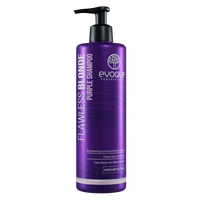
Shampoo gives the fastest correction. A purple mask tones and hydrates in one step, which suits dry bleached hair. A toning foam is the gentlest and the hardest to overdo. See the full Flawless Blonde range.
The bottom line
Once a week suits most blondes. Go up to two or three times a week for platinum and silver, down to every other week for golden and warm shades. Adjust based on what you see when your hair is dry, not wet — wet hair always looks cooler than it will when it dries.
And treat the underlying cause too. If hard water is turning your blonde orange every three weeks, a shower filter will do more for your color than any amount of purple shampoo.